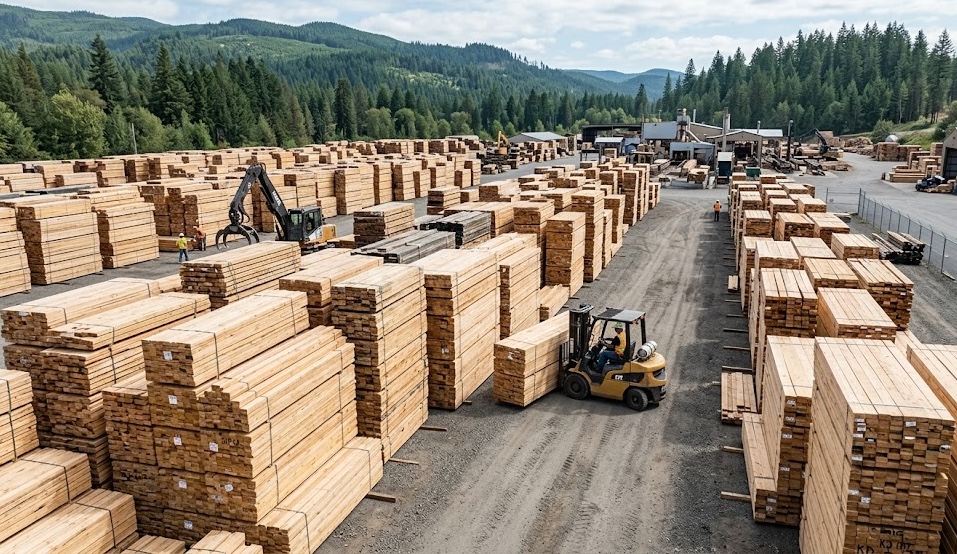
Reclaimed lumber is not a commodity product. Unlike new dimensional lumber, where you walk into a building supply store and grab a stack of 2x4s from a bin, reclaimed wood varies in species, age, condition, dimensions, and character. That variation is precisely what makes it valuable — but it also means you need to approach the selection process with more care and knowledge than you would when buying new stock.
Whether you are building a farmhouse table, installing wide-plank flooring, specifying structural beams for a timber frame, or cladding an accent wall, the decisions you make during material selection will determine the success of your project. This guide covers every factor you should evaluate, from species and grading to moisture content and sourcing.
Choosing the Right Species
The species of wood you choose affects hardness, grain pattern, color, workability, and structural capacity. Reclaimed lumber offers access to species and growth characteristics that are difficult or impossible to find in new production.
Hardwoods
White Oak is one of the most versatile and sought-after reclaimed species. It is dense (Janka hardness of 1,360 lbf), naturally rot-resistant due to tyloses that block moisture penetration, and takes finishes beautifully. Old-growth white oak, commonly reclaimed from barns, warehouses, and whiskey barrels, exhibits tighter grain patterns than anything available from modern forestry.
Red Oak is slightly less dense (1,290 lbf) and lacks the closed-pore structure of white oak, making it less suitable for exterior or wet-area applications. However, it machines cleanly, stains predictably, and is widely available in reclaimed form from 20th-century industrial buildings.
American Chestnut is the rarest and most historically significant reclaimed hardwood. The chestnut blight of the early 1900s functionally eliminated this species from American forests. The only way to obtain American chestnut lumber today is through reclamation from pre-blight structures. It is lightweight, straight-grained, naturally decay-resistant, and carries a warm, honey-brown tone that deepens with age.
Softwoods
Heart Pine (longleaf yellow pine) is the most popular reclaimed softwood. Harvested from the vast longleaf pine forests that once covered 90 million acres of the American Southeast, old-growth heart pine has a Janka hardness of 1,225 lbf — harder than many commercial hardwoods. The resin-saturated heartwood is naturally resistant to insects and decay. It is prized for flooring, paneling, and exposed structural work.
Douglas Fir is commonly reclaimed from West Coast industrial buildings, bridge timbers, and marine structures. It offers excellent strength-to-weight ratio, straight grain, and a warm reddish hue. Reclaimed Douglas fir beams are particularly popular for exposed ceiling and post-and-beam applications.
For a detailed breakdown of species characteristics and applications, see our Wood Species Guide.
Understanding Lumber Grades
Grading establishes a common language between supplier and buyer regarding the quality and condition of lumber. While reclaimed lumber does not always fit neatly into the same grading frameworks used for new production, most reputable dealers apply an adapted grading system that accounts for the unique characteristics of salvaged material.
Select / Premium indicates boards that are clear or nearly clear of defects: no large knots, splits, checks, or wane. These boards offer the most uniform appearance and are suitable for furniture, cabinet faces, and visible trim work where consistency matters.
#1 Common allows small, tight knots and minor character marks. This grade strikes the best balance between character and uniformity and is the most popular choice for flooring, paneling, and table tops where some visual variation is desirable.
#2 Common permits larger knots, nail holes, minor checking, and surface weathering. This grade is ideal for rustic applications: accent walls, shelving, exterior siding, and projects where the history and patina of the wood are the primary appeal.
Structural grading applies to beams, timbers, and load-bearing members. It evaluates mechanical properties — bending strength, shear capacity, and compression — rather than appearance. A structural-grade reclaimed beam may have significant surface character while being fully sound for its intended load.
For comprehensive grading criteria, visit our Grading Guide.
Moisture Content: Why It Matters
Moisture content (MC) is the single most important physical property to verify before purchasing any lumber, reclaimed or new. Wood is hygroscopic: it absorbs and releases moisture in response to its environment, expanding and contracting as it does so. If you install lumber at a moisture content significantly different from the equilibrium moisture content (EMC) of the space it will occupy, you will get gaps, cupping, buckling, or joint failure.
For interior applications in climate-controlled spaces, target a moisture content of 6 to 8 percent. Most well-stored reclaimed lumber that has been under cover in a dry environment will already be in this range, because it has had decades to reach equilibrium. This is one of the significant advantages of reclaimed wood: it is fully seasoned and dimensionally stable in a way that freshly kiln-dried stock often is not.
For exterior applications or unconditioned spaces, a moisture content of 12 to 15 percent is acceptable. Always verify with a pin-type or pinless moisture meter before committing material to your project. If boards read above your target, they can be acclimated in the installation environment for one to two weeks, or kiln-dried to specification if needed.
Acclimation Best Practices
Stack lumber in the room where it will be installed, using stickers (thin spacer strips) between each layer to allow air circulation on all faces. Maintain normal HVAC operation during the acclimation period. Measure moisture content at the center of several boards at 48-hour intervals. When consecutive readings show no change, the lumber has reached equilibrium and is ready for installation.
Dimensions and Sizing Considerations
Reclaimed lumber is often available in dimensions that no longer exist in new production. Wide boards — 10, 12, even 16 inches — were common in early American construction because the old-growth trees they came from had massive diameters. Modern plantation timber rarely produces boards wider than 8 inches without edge-gluing.
Thickness also varies. Reclaimed boards may be full-sawn (rough on all faces) or partially dressed. A board sold as a nominal 1-inch may actually measure anywhere from 3/4" to a full 1" depending on its original milling and how much material was removed during re-processing. Always confirm actual dimensions, not nominal, before designing joinery or specifying layouts.
Lengths tend to be more variable than with new lumber. Reclaimed boards are cut from whatever structures they came from, so you may find 4-foot boards alongside 16-foot boards in the same species and grade. Plan your cut list with flexibility and expect to optimize layouts to minimize waste from shorter or irregular-length stock.
Sourcing: What to Look For in a Supplier
Not all reclaimed lumber suppliers operate to the same standard. The quality of the material you receive depends heavily on how it was salvaged, processed, stored, and graded. Here are the key indicators of a reliable supplier:
- Documented provenance. A good supplier can tell you where the wood came from: the building type, location, approximate age, and species identification. This matters for both quality assurance and for projects seeking LEED credits or other sustainability certifications.
- Proper de-nailing and metal detection. All embedded metal — nails, screws, bolts, staples, and wire — must be removed before the lumber reaches your shop. Missed fasteners can damage saw blades, planers, and router bits, and pose a safety risk.
- Covered, dry storage. Lumber stored outdoors or in uncovered conditions will absorb moisture and may develop mold, staining, or insect activity. Verify that your supplier stores inventory under roof on a dry, level surface.
- Accurate grading. Ask how the supplier grades their material and whether they offer grading certificates. Inconsistent or inflated grading is one of the most common complaints in the reclaimed lumber market.
- Willingness to provide samples. Any reputable dealer will send or allow you to pick up samples before a large order. If a supplier resists this, consider it a red flag.
Inspection Tips: What to Check Before You Buy
Even with a trusted supplier, it pays to inspect reclaimed lumber carefully before accepting delivery or committing it to your project. Here is a practical checklist:
Structural Integrity
Check for deep checks (cracks along the grain), splits at the ends, and soft spots that indicate rot or insect damage. Tap the board with a hammer or mallet — sound wood produces a clear, resonant tone, while decayed wood sounds dull and hollow. For beams and timbers, probe suspect areas with an awl; it should meet firm resistance within the first 1/4 inch.
Embedded Metal
Run a strong rare-earth magnet over every face and edge of the board. Even after professional de-nailing, small fragments of broken nails or wire can remain embedded below the surface. Mark any hits and either avoid those areas during machining or extract the metal with a nail puller and drill.
Surface Contamination
Inspect for paint, stain, oil, or chemical contamination. Some historical buildings used lead-based paint, which requires careful handling and may disqualify the lumber from interior residential use unless fully removed. Boards from industrial settings should be checked for petroleum, creosote, or chemical staining. When in doubt, request a material safety data sheet or have the material tested.
Straightness and Flatness
Sight down the length of each board to check for bow, crook, twist, or cup. Some amount of warp is acceptable and can be corrected during milling, but severely distorted boards will yield excessive waste. For flooring and paneling, flatness is critical. For rustic beam applications, moderate character is often acceptable and even desirable.
Matching Wood to Application
The best reclaimed wood for your project depends on the demands of the application. Here is a quick reference:
| Application | Recommended Species | Grade |
|---|---|---|
| Flooring | Heart Pine, White Oak, Maple | Select or #1 Common |
| Accent Walls / Paneling | Any species | #1 or #2 Common |
| Furniture & Tables | White Oak, Walnut, Chestnut | Select or #1 Common |
| Exposed Beams | Douglas Fir, Heart Pine, Oak | Structural |
| Exterior Siding | White Oak, Cypress, Heart Pine | #1 or #2 Common |
| Shelving | Any hardwood | #1 Common |
| Garden Beds / Outdoor | White Oak, Cypress (no treatment) | #2 Common or Utility |
Final Advice: Plan Ahead and Order Smart
Reclaimed lumber is a finite, variable-supply product. Unlike new lumber, which can be reordered to identical specifications at any time, a particular lot of reclaimed material may not be available once it sells. If you find boards that match your project, secure them promptly.
Order 10 to 15 percent more material than your cut list requires to account for defect culling, end trimming, and layout optimization. This overage is standard practice even with new lumber and is especially important with reclaimed stock, where individual board quality can vary more within a lot.
Finally, talk to your supplier early in the design process, not after drawings are finalized. A good reclaimed lumber dealer can advise on what species and dimensions are currently in stock, suggest alternatives if your first choice is unavailable, and help you match material to your budget and timeline.
At Norfolk Lumber, we stock a rotating inventory of reclaimed hardwoods and softwoods in a range of species, grades, and dimensions. If you need help selecting the right material, our team is available to walk you through options in person or by phone.