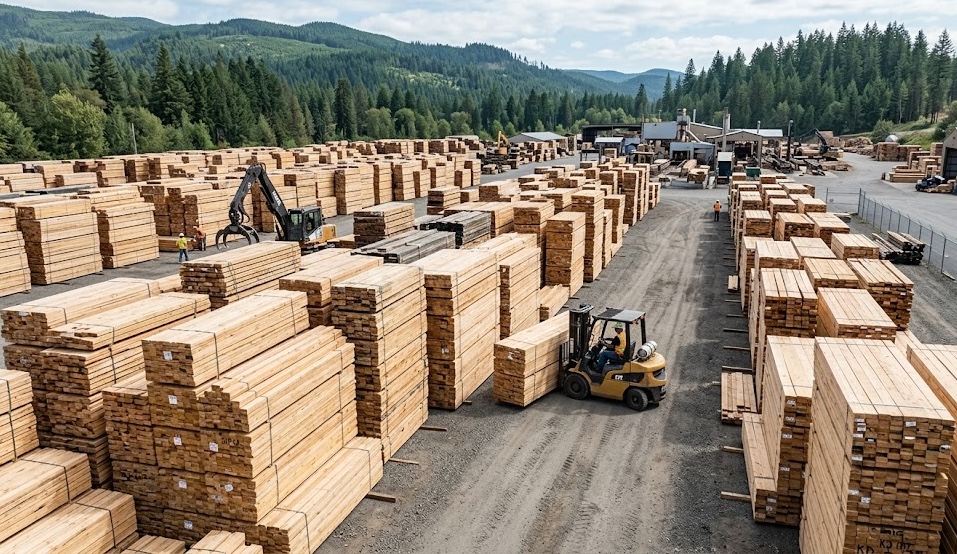
Why Winter Storage Matters
Winter in the Mid-Atlantic brings cold temperatures, fluctuating humidity, and heated indoor environments that can wreak havoc on improperly stored reclaimed lumber. The key challenge is the dramatic difference between outdoor and indoor moisture conditions. Outside, wood may absorb moisture from rain, snow, and high humidity. Inside, heating systems can drop relative humidity to 20% or lower, causing wood to shed moisture rapidly and potentially crack or warp.
Reclaimed lumber is particularly sensitive to these swings because it has already been through decades of environmental stress. While that history gives it character, it also means the wood may have internal stresses that can release unpredictably when moisture content changes too quickly.
Outdoor Storage Best Practices
If you must store reclaimed lumber outdoors during winter, follow these guidelines to minimize moisture absorption and physical damage:
- Elevate the stack: Keep lumber at least 6 inches off the ground on concrete blocks, pressure-treated sleepers, or steel rails. Ground contact invites moisture wicking and fungal growth.
- Use stickers: Place uniform stickers (3/4-inch to 1-inch thick strips of dry hardwood) between each layer of lumber, aligned vertically every 16 to 24 inches. This promotes air circulation and prevents mold between boards.
- Cover the top only: Use a tarp or metal roofing over the top of the stack, but leave the sides open. A fully wrapped stack traps moisture and creates a breeding ground for mold and mildew.
- Weight the top: Place heavy weights (concrete blocks work well) on top of the stack to resist warping and cupping as the wood adjusts to ambient conditions.
- Choose a location wisely: Store on the south side of a building if possible, where sun exposure helps keep the stack dry. Avoid low-lying areas where water pools.
Indoor Acclimation
Before installing reclaimed lumber indoors — whether as flooring, paneling, or trim — the wood must acclimate to the interior environment. This is true year-round, but it is especially critical in winter when the difference between outdoor and indoor humidity levels is greatest.
How Long to Acclimate
A general rule is two weeks of acclimation in the space where the wood will be installed. However, if the wood is coming from outdoor storage in winter, you may need three to four weeks. Use a pin-type moisture meter to track progress. The goal is to bring the wood within 2% of the moisture content of the subfloor or surrounding woodwork.
Acclimation Setup
Break the lumber out of any shrink wrap or sealed packaging immediately — trapped moisture will cause condensation and mold. Stack the wood with stickers in the room, and ensure the HVAC system is running at normal occupancy settings. Do not crank the heat to speed things up; rapid drying causes surface checking and end splits.
For flooring, spread the boards out across the room rather than stacking them in a tight pile. The more surface area exposed to the ambient air, the more evenly the wood will adjust.
Monitoring Moisture Content
Invest in a quality moisture meter — it is the single most important tool for working with reclaimed wood in winter. Pin-type meters are accurate and affordable for spot-checking. Pinless meters are faster for scanning large quantities but can be thrown off by metal (old nails, fasteners) embedded in reclaimed wood.
For hardwood flooring installations, target 6% to 9% moisture content. For paneling and trim, 8% to 10% is acceptable. For structural timber, 19% or below is the code requirement, but lower is always better for enclosed applications.
Dealing with Existing Defects
Reclaimed lumber often arrives with end checks, surface cracks, and minor splits. Winter conditions can aggravate these defects if moisture content drops too quickly. To minimize further damage:
- Seal the ends: Apply a wax-based end sealer like Anchorseal to all end grain surfaces immediately after delivery. End grain loses moisture up to 12 times faster than face grain, making it the most vulnerable point.
- Avoid direct heat: Do not place reclaimed lumber directly in front of heating vents, radiators, or wood stoves. The intense localized heat will cause rapid drying and new cracking.
- Maintain humidity: If your shop or home is extremely dry in winter (below 30% RH), consider running a humidifier in the acclimation space to slow the drying process.
Planning Ahead
The best winter storage strategy is to plan ahead. If you know you have a spring installation coming, order your reclaimed lumber in late fall and begin indoor acclimation before the worst of winter arrives. This gives the wood plenty of time to stabilize and allows you to identify any pieces that develop unacceptable defects before installation day.
At Norfolk Lumber, we kiln-dry most of our reclaimed inventory to 8% to 10% moisture content before it leaves our facility, which gives you a significant head start on acclimation. But even kiln-dried wood needs time to equalize with your specific interior environment — every building is different.