Why Your Supplier Matters
The quality of your reclaimed lumber project depends as much on your supplier as it does on your craftsmanship. A great supplier provides properly identified species, accurate grading, thorough denailing, appropriate drying, honest pricing, and reliable service. A poor supplier can deliver misidentified species, hidden metal that destroys your blades, wet wood that shrinks and cracks after installation, and no recourse when things go wrong.
The reclaimed lumber market has grown significantly in recent years, and not all participants maintain the same standards. Here is what to look for — and what to watch out for.
Questions to Ask Before You Buy
1. Where Does the Wood Come From?
A reputable supplier should be able to tell you the general provenance of their material — the type of structure it came from, the approximate location, and the approximate era. They should also be able to tell you whether the wood was salvaged through careful deconstruction or pulled from a conventional demolition, which affects quality and how much damage the material sustained during recovery.
Be cautious of suppliers who cannot or will not discuss sourcing. "It is all from old barns" is not a sufficient answer if you need to verify species, rule out chemical treatment, or provide chain-of-custody documentation.
2. How Is the Wood Processed?
Ask specifically about the denailing process. How is embedded metal detected and removed? A supplier who relies solely on visual inspection is not catching the hidden nails and metal fragments that can damage your tools. Metal detection — either handheld or inline — should be a standard part of the processing pipeline.
Ask about kiln drying. Is the material kiln-dried, air-dried, or sold at whatever moisture content it arrives? Kiln drying to a specified moisture content (typically 6% to 10% for interior applications) is essential for flooring, paneling, and furniture stock. Air-dried material may be acceptable for structural timber or outdoor applications, but the moisture content should be measured and disclosed.
3. Can You Identify the Species?
Species identification matters for structural applications (different species have different design values), for finishing (different species respond differently to stains and finishes), and for pricing (heart pine and chestnut command higher prices than mixed softwood). A knowledgeable supplier should be able to identify species confidently and explain how they make the identification.
If a supplier is selling boards as "reclaimed oak" without distinguishing between red oak and white oak, or as "reclaimed pine" without differentiating between old-growth heart pine and recent Southern yellow pine, their level of expertise may not be what you need for a quality project.
4. What Grading Standards Do You Follow?
New lumber is graded by established rules organizations (NHLA for hardwoods, SPIB and WCLIB for Southern pine, etc.). Reclaimed lumber does not have a universal grading standard, but reputable suppliers establish their own grading criteria that parallel the industry standards — typically offering grades like "select/premium" (minimal defects), "#1 common" (moderate character), and "character/rustic" (heavy character marks, nail holes, checking).
Ask your supplier to describe their grading criteria and show you examples of each grade. The grading should be consistent — a board graded "#1 common" in January should look similar to a board graded "#1 common" in July.
5. Do You Offer Custom Milling?
Many projects require specific dimensions, profiles, or surface finishes that standard stock does not provide. A supplier with on-site milling capability — resawing, planing, tongue-and-groove milling, custom profiling — gives you the flexibility to get exactly what your project needs. Suppliers who buy and resell without processing capability are limited to selling material as-is.
Red Flags to Watch For
- No physical location or yard: Legitimate reclaimed lumber dealers maintain a physical inventory that you can visit and inspect. Be cautious of online-only sellers who ship from undisclosed locations.
- Unable to provide references: Any established supplier should be able to provide references from past customers, builders, or designers who have used their material.
- Prices that seem too good: Properly sourced, processed, and kiln-dried reclaimed lumber costs what it costs. If a price seems dramatically below market, the material may not be what it is claimed to be — it may be new wood artificially distressed, improperly processed reclaimed wood, or material from an unknown or questionable source.
- No return policy: Reputable suppliers stand behind their product. A reasonable return or exchange policy for material that does not meet the agreed-upon specifications is a sign of a confident, trustworthy dealer.
- Pressure to buy immediately: "This material will be gone tomorrow" is a common pressure tactic. While it is true that specific lots of reclaimed wood are finite, a quality supplier will give you time to make an informed decision and will not use artificial urgency to close a sale.
Visiting the Yard
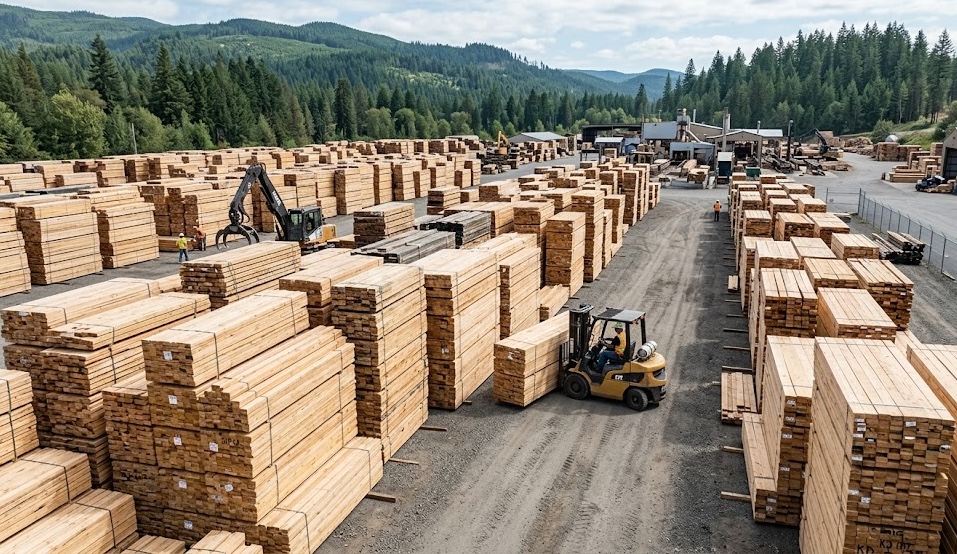
The single best thing you can do before buying reclaimed lumber is visit the supplier's facility in person. Walk the yard, look at the inventory, touch the wood, ask questions, and observe how the operation is run. Is the material stored properly? Is the facility organized and professional? Do the staff know their products? Can they show you the processing equipment?
At Norfolk Lumber, we welcome visitors to our Virginia Beach facility during business hours. We encourage you to come see our inventory, watch our processing operation, and talk with our team. We believe that an informed customer is the best customer, and we are happy to spend time educating you about our material, our processes, and how to get the best results from reclaimed wood.